Sunday, December 14, 2014

Striving for Peace in a very Violent World

The other day I read this horrific story about a man, Los Angeles actor Dimitri Diatchenko, who killed his girlfriend's companion rabbit, ate it, sent her the pictures, and threatened to do the same to her.

The story is so horrible that I didn't even want to read it or write about it. But I felt like I couldn't ignore the interrelated violence against animals and women.

Feminists and social scientists have long recognized the interrelationship of  intimate partner violence and companion animal abuse. This is one of the topics I briefly explore in my law review article on the intersection of animal rights and reproductive justice. Abusers both harm companion animals to inflict psychological pain on their partners, and survivors are fearful of leaving abusive partners for fear their companion animals will be harmed if they are not there to protect them. As a result, advocates have pushed for laws that recognize companion animal abuse as part of intimate partner violence and that provide housing for companion animals so that women can leave abusers.

While this connection between violence against women and violence against companion animals is well recognized, seldom do feminists and other social justice advocates extrapolate that connection to broader society. We march for peace and to end violence, while at the same time eating the severed body parts of tortured individuals whose lives are no less important than those of our companion dogs and cats. We torture and kill billions of animals every year. I believe that as long as we are engaged in such incredible violence every day, we are never going to achieve our dreams of peace. As Leo Tolstoy said:

"As long as there are slaughterhouses, there will be battlefields."
Gary Francione often says, "We are all Michael Vick." I thought about entitling this post "We are all Dimitri Diatchenko." However, the intention of his actions, to cause psychological pain and fear seems to make them more appalling than those of Michael Vick or of any of us in our everyday interaction with animals.

On the other hand, no matter what the intention, the resulting psychological pain is the same. Every day, babies are torn away from their mothers, male chicks are ground up alive and fed back to their siblings, and cows and pigs scream out in fear as they watch one after another of their friends and family members led to their deaths. Just so we can eat animal milk, eggs, and flesh.

Our reason for inflicting such pain and suffering surely doesn't excuse it. Not only do we have no need to eat animal products, but doing so is damaging to our own health and the health of the planet. So, while I don't quite feel comfortable saying that we are all Dimitri Diatchenko, we are not much better.

Monday, December 1, 2014

Irrational Fear and What Will Kill Us

In recent weeks, the headlines have been full of hysteria about ebola. And that hysteria has been echoed on facebook, twitter, and throughout the blogosphere. That's not to minimize the impact that the ebola epidemic is having in several African nations or the individual impact that ebola has on individuals and families. By all accounts, it sounds like a horrible disease. However, the chances of any one person, particularly in the United States, contracting and dying from ebola are incredibly small.

On the other hand, we do know what is likely to kill us; we have it within our power to prevent it; and we don't really seem to care.

Chronic Illness

Most people in the United States die from chronic illness, with heart disease being the biggest killer of both men and women. According to the CDC, of the approximately 2.5 million Americans who died in 2011, nearly 595,000 died from cardiovascular disease, just over 575,000 died of cancer, and nearly 130,000 died of stroke. That's almost half of total deaths. These diseases are largely the result of diet and other lifestyle factors and in many cases are preventable, treatable, and reversible. Over the last few years, study after study has shown the dangers of eating meat, eggs, and dairy. According to Johns Hopkins School of Public Health, which provides links to more than a dozen studies:
A strong body of scientific evidence links excess meat consumption, particularly of red and processed meat, with heart disease, stroke, type 2 diabetes, obesity, certain cancers, and earlier death. Diets high in vegetables, fruits, whole grains and beans can help prevent these diseases and promote health in a variety of ways.
According to one expert, of the fifteen top causes of death in the United States, only one - accidents - cannot be prevented, treated, and/or reversed through a plant-based diet. Nevertheless, rather than striving to actually treat and reverse disease with diet, most doctors and patients are more willing to use drugs and surgeries that are dangerous and ultimately ineffective.

Embedded image permalink 
The animal agriculture industry, in collaboration with the U.S. government, spends millions of dollars a year to convince us to eat animal products. And, as I have detailed in depth elsewhere, the U.S. government provides less than transparent information to consumers in issuing the U.S. Dietary Guidelines. And yet if you try to inform people about this information that could save their lives, such as the comic NonSequitor has done recently, we are the ones accused of spreading propoganda:

Non Sequitur

Climate Change

If we don't die from chronic illness, climate change will probably kill us all. At least the most vulnerable of us. Climate change is a public health and environmental disaster.

Over the last year, the Intergovernmental Panel on Climate Change (IPCC) has issued a series of comprehensive reports on climate change. According to IPCC, climate change will cause an “alteration of ecosystems, disruption of food production and water supply, damage to infrastructure and settlements, morbidity and mortality, and consequences for mental health and human well-being” as well as an increase in violent conflict. Other impacts include “extreme weather events, sea level rise, climate refugees, adverse impacts on indigenous populations, and spreading of diseases.” Climate change will affect marginalized individuals and communities including those in the Global South most dramatically.

The Pentagon has identified climate change as a major threat to national security. And recently, the British Medical Journal appealed to the World Health Organization to declare climate change a public health emergency.

Animal agriculture contributes a huge proportion of greenhouse gases, as much as 18% of the total according to the Food & Agriculture Organization of the United Nations, and more than half according to former World Bank environmental experts.

It is unclear whether there is still much we can do to stop climate change or whether we have delayed too long. But it is clear that this is something we should be freaking out about.
 ------
So we know what will kill us. It's not ebola. It's animal agriculture. And yet, we, as a society, seem completely unconcerned. There are few headlines drawing attention to these true crises that are within our power, even as individuals, to act to address.

The holidays, in particular, are a time of rampant overeating. And it's just not considered a party unless there's a decaying corpse on the table. This tradition is killing animals. It's killing us. It's killing our planet.Where is the sense of hysteria about this?

Here's Jon Stewart discussing this and related issues in a much more amusing way than I can:

http://thedailyshow.cc.com/videos/ysfr9u/a-million-ways-to-die-in-the-u-s-

Sunday, November 30, 2014

Journal Article Summary: Health and Welfare Preempted


In 2008, the Humane Society of the United States released an undercover video showing horrific abuse of disabled cows in a California meat packing and meat processing company. As a result, California passed a law prohibiting animals who could not stand and walk under their own power from entering the food supply and requiring that they be euthanized humanely. 

The meat industry immediately challenged the law as conflicting with federal law. The Ninth Circuit upheld the law based on long-standing states' rights to make decisions regarding treatment of nonhuman animals, including decisions regarding which animals can be eaten. However, in 2012, in National Meat Association v. Harris, the Supreme Court struck down the law as preempted by the Federal Meat Inspection Act. 

As I argue in this article, the decision undermines California's ability to protect its human and nonhuman inhabitants. Moreover, the decision places misplaced reliance on the Federal Safety and Inspection Service within USDA to protect animal welfare and food safety. The agency has shown time and again that it is not up to the task. At the same time, Congress’ unwillingness to act to reverse the Supreme Court leaves states and the public in an untenable position: unprotected and impotent to act. This decision harms human and nonhuman health and undermines states' rights in an area where states have always had the right to act.

Friday, November 28, 2014

Boycotting Black Friday vs. Creating an Alternative Economy

As we move into the holiday season, there seems to be a tension, at least among progressives, between people's desire to buy a bunch of cheap crap and the recognition that all of that cheap crap comes at a cost to workers. For the last few years, this issue has been highlighted around stores that now start "Black Friday" on Thursday and require their employees to work on Thanksgiving. A number of my friends have posted articles and petitions, such as this one, urging people to boycott these stores.

For me, this boycott is easy. Since 2004 (read more about that here), I have slowly extricated myself from the mainstream economy. It long ago ceased to be a boycott and became an opportunity to seek out businesses that have social justice and environmentally friendly missions and otherwise share my values, as well as to think about how much stuff I actually need. As a result, I haven't shopped at most of these stores in a decade or more.

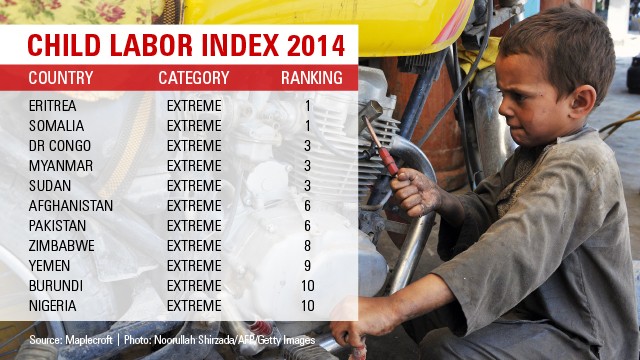
It is good to think about how our rampant consumerism impacts workers. But the oppression and exploitation that these major corporations engage in does not start and end with the holidays. Does anyone believe that a store that tells employees they will be fired if they don't show up on Thanksgiving treats their employees well the rest of the year? And it does not start and end with the American employees that work in these stores. The products that these stores sell are produced, primarily in the Global South, at considerable environmental, human, and nonhuman cost. The exploitation continues day in and day out so that we can have our smartphones, big screen tvs, designer clothing, chocolate bars, etc. There is no holiday from the exploitation that is occurring worldwide.

http://www.cnn.com/2013/10/15/world/child-labor-index-2014/
There are alternatives. There are businesses that do not exist solely to make money and that care about how their products are produced. A couple of years ago, I got this email from one of my favorite companies, Fair Indigo, a sweatshop free clothing company explaining their refusal to recognize Black Friday and posing other suggestions:

Tgiving1
While my first choice is always to buy preowned items, these are types of companies I will support, not just at this time of the year, but all throughout the year.


Monday, November 24, 2014

"Humane" Oppression

I recently came across this article regarding a history text book in Massachusetts. Parents were upset that the book seemed to minimize the oppression inherent in the institution of U.S. slavery. Specifically they objected to a statement that said: “Slaves were treated well or cruelly depending on their owners. Some planters took pride in being fair and kind to their slaves.”

Parents objected to the statement as downplaying the realities of slavery and the implication that a good slant can be put on "one person owning another person."

I would agree with these objections, and very few people today would try to justify slavery based on how well the slaves are treated.

Nevertheless, we continue to tell ourselves these same lies. We continue to attempt to justify oppression based on our treatment of the oppressed.

In recent years, as more and more details about the realities of animal agriculture have come to light, people who are concerned about these realities -- but don't want to give up their cheese and bacon -- attempt to justify their exploitation of nonhuman animals based on treating them humanely. There are nearly 10 million results in Google for "humane meat." The news is filled with stories like this recent one about farmers who try to justify their slaughter of other individuals based on how well they are treated while they are alive. The reality is that even so-called "humane meat" is rarely humane. It is simply a marketing ploy to allow us to feel a little bit better about our oppression of others.

And the truth is that there is nothing humane about raising animals for the sole purpose of killing and eating them. Slavery is still slavery.

Sunday, November 23, 2014

Saving Benjy, the Gay Bull

Benjy the gay bull

Recently,  a bull in Ireland made headlines when he refused to do "his job" impregnating cows and showed much more interest in other bulls.

The gay rights and animal rights communities came together to start a campaign to purchase Benjy and send him to a sanctuary where he could live out the rest of his life with other animals. Ultimately, The Simpsons creator and known animal activist, Sam Simon, donated the money to save Benjy and he is now at the Hillside Animal Sanctuary in England.

That's great for Benjy, but what about all the other animals whose sexual orientation hasn't raised them from obscurity? A representative of the animal rights organization that advocated to save Benjy is quoted as saying: "As a gay man myself, I know only too well what it is like to be treated indifferently." However, in this instance, it was Benjy's interest in other bulls that saved him from indifference.

No one should be oppressed based on their sexual orientation. But neither should they be oppressed based on their species or ability to reproduce. The rest of the animals not saved from Benjy's farm will continue to be exploited, forced to reproduce, have their children torn from them, and will ultimately join the more than 53 billion land animals that are slaughtered for food across the world annually.

When something happens to make us see a farmed animal as an individual, people rise up to try to save that individual. But little thought is given to the other individuals who end up on our plates every day. As Joseph Stalin said, "One death is a tragedy; one million is a statistic."

Gay activists connected with Benjy for obvious reasons, but those concerned about oppression of marginalized groups and individuals should not limit their concern to supposed gay animals. Every animal is an individual with needs and desires. And every animal should be allowed to live out his or her life somewhere they are loved and happy. 

The Animal Kill Counter: Basic Version << ADAPTT :: Animals Deserve Absolute Protection Today and Tomorrow

Animals Slaughtered for Food Since You've Been on this Page:*

0 marine animals
0 chickens
0 ducks
0 pigs
0 rabbits
0 turkeys
0 geese
0 sheep
0 goats
0 cows and calves
0 rodents
0 pigeons and other birds
0 buffaloes
0 dogs
0 cats
0 horses
0 donkeys and mules
0 camels and other camelids
*Counter from ADAPTT

Monday, August 4, 2014

Feel No Pain

The other day, I was reading this post about street harassment and the ways in which Black women experience street harassment differently.

I was particularly struck by the interviewee, Feminista Jones' discussion of the historical view that Black women did not experience pain in the same way as White women:
There is a historical perspective for this idea that black women are able to endure more pain and suffering. Part of that is that people need us to be that way—they need for us to not feel as much pain, so that they can make use of us. For example, black women were experimented on gynecologically. That's how gynecology came about. The father of gynecology, [Marion Sims,] experimented on one particular slave more than 30 times without anesthesia, the slave Anarcha, and he justified it by saying that black enslaved women don't experience the same kind of pain as white women.
 Jones goes on to add:
We also see examples of it with black women who have been domestics: They can work 16 or 18 hours a day for other people, they can leave their children behind, they're used to it, this is what they do.
While most people would now see these perceptions of Black women as absurd, we continue to develop myths about nonhumans that allow us to impose pain and suffering on them. The idea that nonhumans do not experience pain, or at least not the way that we do, is common. This assumption is used as a justification for forcing animals to endure a variety of painful procedures without pain reliever, including:  branding, circumsizing, tail-docking, removing the ends of hens' beaks, and more. But the truth is that these procedures are incredibly painful and in many cases continue to cause pain throughout the animals' (unnaturally short) lives. The idea that fish and other sea animals do not experience pain is particularly common, but recent studies have shown that is simply not the case. Throwing a live lobster into a pot of boiling water is, in fact, painful.

Similarly, baby animals are removed from their mothers almost immediately despite the pain that this causes for both babies and mothers. We cannot have cows' milk without forcibly impregnating cows and then removing their calves shortly after birth. Despite the fact that mother cows grieve so loudly and forcefully that it disturbs nearby neighbors, we cling to the idea that we are not harming anyone when we eat our cheese.

We create stories about the individuals that we are mistreating that allow us to continue to mistreat them without addressing the reality of our actions. As I discuss in length in my law review article, Combatting Reproductive Oppression: Why Reproductive Justice Cannot Stop at the Species Border, these myths harm nonhumans and marginalized humans and allow their oppression to continue unnoticed and unaddressed. Just like racism allows the pain endured by Black women to be ignored, speciesism allows the pain endured by nonhumans to be ignored and discounted.

Only by combatting these myths and addressing the reality experienced by every individual will we be able to create a just society for all.

Saturday, August 2, 2014

Why am I Vegan?

I ask and answer this question because I've been feminist much longer than I've been vegan and because I expect most of the readers of this blog to understand feminism but to not necessarily understand veganism. Having spent a long time in the women's rights movement, I'm surrounded by wonderful people for whom feminism needs no explanation. Unfortunately, most of these same people seem to see the oppression of nonhumans as unimportant and unrelated to feminism. I've come to believe that nothing is further from the truth, and I plan to use this space to explain why.

I am vegan because I believe in social justice and in fighting to end oppression and exploitation of all earth's inhabitants. I believe that all oppression is interrelated and that we will never have a just world as long as the torture, slaughter, and mistreatment of those least able to defend themselves goes unaddressed.

That's the short answer.

But there's a longer answer.

In 2004, when George W. Bush was "reelected" president, I was devastated. It was definitely the most difficult political event I've ever had to deal with. I could not believe that my fellow Americans would want this person to continue to govern. I knew that I did not want to live in a country or world where that was the case.

At the same time, I started to think about and question how I was contributing to this world I did not want to live in.

While most of us recognize the issues of corporate power and money in politics and may even boycott some of the supposedly worst offenders, we generally shop at a variety of multinational corporations without any thought as to where our money is going. I know I did. But for some reason, W's reelection changed that.

I started researching corporate campaign corporations and stopped giving my money to corporations that supported Republican candidates and right wing initiatives. But my research didn't stop there. Over time, I started investigating the social justice and environmental impact of every purchase I made. I stopped buying goods produced in sweatshops or otherwise made by slave labor, started buying union-made or second-hand products and made numerous additional changes in my life to reduce my footprint.

As I started to consider all of my lifestyle choices, I decided that I was going to become vegetarian again. I did not even consider becoming vegan because only extremist animal rights crazies do that, and I certainly wasn't one of those!!

I had first become interested in vegetarianism in college, primarily because of the environmental impact of raising animals for food. The amount of water and grain used to feed animals is stunning and appalling when so many humans are hungry and without access to safe water. And I knew that rainforest was being destroyed to make room for cows that would eventually become fast food burgers.

As I continued to evaluate my choices and my lifestyle, several important things happened.
  • In 2005, I met a wonderful person who would become my longtime partner. He viewed the world as I did, understood my desire to try to live in a way that doesn't exploit humans or the planet, and we pushed each other to do much more in this regard.
  • In 2006, I made my first vegan friend. I started to reevaluate my conceptions of vegans and veganism and to learn more about vegan cooking.
  • In 2007, my partner and I bought a house together and decided it would be vegetarian. We also started participating in activities hosted by DC-based animal advocacy organization, Compassion Over Killing (COK), meeting more vegetarians and vegans, and learning more about the treatment of animals raised for food. Also that year, I heard Bobby Kennedy Jr. speak about the toxins in fish at the Public Interest Environmental Law Conference in Eugene, OR, and I completely stopped eating seafood, the only meat I still ate on occasion.
    Front Cover
  • In 2008, I picked up the Sexual Politics of Meat by Carol J. Adams at MooShoes, a vegan shoe store in New York. (I began shopping at vegan shoe stores long before I was vegan because I learned that they monitored the labor standards of their shoes and often refused to sell shoes produced in sweatshop conditions). That book lays out the interrelationship between misogyny and sexism and meat eating. I told my partner I thought it was going to make me want to go vegan after she explained that eggs and milk are only available through the exploitation of the reproductive systems of female animals, animals who are first exploited because of their ability to become mothers and then exploited again when they are killed for their flesh. As a reproductive justice advocate, working to end the reproductive oppression of humans, particularly marginalized humans, this had a big impact on me. Nevertheless, it was awhile before we actually decided to become vegan.
  • Later in 2008, COK and Sticky Fingers, the local vegan bakery hosted a vegan hotdog eating contest for national hotdog month, and Mike participated. They sent us home with a bunch of information about animal agriculture and an issue of VegNews. I'm still not exactly sure what happened, but we looked through the materials, and by the end of the day, we'd decided we were going to be vegan. (I don't necessarily endorse promoting overconsumption as a way to encourage veganism, but it worked for us!) Of course, we didn't go vegan that day because we had a lot of cheese we needed to go through and otherwise needed an adjustment period, but on September 15, 2008 - the day after Mike's 40th birthday - we eliminated all animal products from our diets and lives and never looked back. It was much easier and more enjoyable than I anticipated. I only wish I had done it earlier.
But the reasons that I'm vegan do not end there. They continue to develop as time goes on. At the time, I had a general sense that animal agriculture was bad for the planet and bad for the animals. Now I know innumerable reasons to be vegan.
  • With the rise of movies like Forks over Knives and growing awareness, many people are adopting plant-based diets for health reasons. When Mike and I stopped eating animal products, we didn't really know that there were health reasons. We weren't concerned about nutrition, as we knew many healthy vegans by that time, but we had no idea how much our health would benefit. I've learned a lot about nutrition over the last six years.
  • While I, like most progressive, informed Americans had a general sense that the treatment of animals on factory farms was wrong, it is much worse than I imagined or understood. And the issues aren't limited to factory farms. Many cruel practices occur routinely as a part of animal agriculture on family, as well as factory farms. I've learned a lot about the realities of animal agriculture in the last six years. (Although I still won't watch undercover videos).
  • While, as I mentioned, I initially became interested in vegetarianism for environmental reasons, I had no idea of the actual environmental impact of animal agriculture. In addition to using tremendous amounts of grain and water, animal agriculture is a significant source of water, air and soil pollution and is a public health nightmare for surrounding communities. In addition, animal agriculture is a leading contributor to global climate change. I've learned a lot about the environmental impact of animal agriculture in the last six years.
  • When I became vegan, despite that fact that I had eliminated animal products from my life (to the extent possible), I did not yet believe that all use of nonhuman animals by humans was wrong or unethical. However, as I've learned more about other animals and about our attitudes towards them, I've come to realize that we have no more right to exploit other animals than we do other humans, that using species as a basis for oppression is no different than oppression based on race, gender, sexual orientation, disability, etc. I've become an abolitionist vegan. I've learned a lot about social justice in the last six years.
Read more about all these issues elsewhere on this blog.

I am vegan for my own health, for the health of the planet, for the health of the animals and because treating other animals as though they're simply resources placed on this planet for humans to exploit is unethical. And I believe that veganism is a feminist issue and that a feminism that struggles to end all forms of oppression demands veganism.

That's the long answer. But there's an even longer answer (at least in time if not in length).

I'm vegan because I was raised in a family and a community that taught me to think critically, to question the way things are and the way things have always been, and to have compassion for all individuals. There's only one place that such a world view ultimately leads you.

For resources beyond those linked above, check out: